

Your business is busy, but do you know how its finances are doing?
Rising sales don’t automatically mean rising profit. Without tidy records, spending slips by unnoticed, personal and business money get mixed up, and customer bills don’t get followed up in time.
Financial reports let you see how your business is doing from the numbers, not from guesswork: the Profit & Loss to understand your profit, the Cash Flow statement to track money coming in and going out, and Receivables Aging to see which bills are still unpaid.
The problem isn’t that we can’t run a business. It’s that when everything lives in our heads, plenty of things are easy to miss.
The good news is you don’t need a complicated finance system straight away. There are a few simple things you can start tidying up today to make your business easier to keep an eye on.
Here are five of them.
1. Not Knowing Where the Business Money Goes
Ever noticed your business account running low when it doesn’t feel like you’ve spent anything big?
The cause is often the small expenses that slip under the radar. Fuel, phone credit, shipping, office supplies, and other everyday purchases look trivial one at a time. Added up over a month, they can come to a lot.
Without clear records, all you see is the balance going down, with no real idea of where the money went.
What you can do
- Record every expense, however small.
- Group expenses into categories such as operations, transport, supplies, or marketing.
- Set aside time each week to review your spending and see which categories take the most money.
It doesn’t have to be perfect. If recording every day isn’t a habit yet, a weekly catch-up is still far better than not recording at all.
How Tumra helps
Tumra lets you record expenses by category and ties them straight to your Profit & Loss. That way you see your business spending in a structured way and understand where the money is going.
2. Not Knowing Which Products or Services Make the Most Money
Your best seller isn’t necessarily your most profitable product.
A shop might sell lots of one item every day on a very thin margin, while another product that sells less often brings in more profit.
The same goes for service businesses. A project that looks big isn’t always the most profitable one if it takes too much time or extra cost.
If you only look at how much you sell, you can miss the information you need to decide what to do next.
What you can do
- Record sales by product or service.
- Compare the products that sell most often with the ones that bring the biggest margin.
- For service businesses, review revenue by client or project and compare it with the time and costs involved.
- Use what you learn to decide which products, services, or projects deserve more attention.
The goal isn’t just to sell more, but to understand which sales actually help the business grow.
How Tumra helps
For retail, Tumra gives you sales and margin reports so you can see how each product performs. For service businesses, you can see revenue by client and project, which makes it easier to understand what each one contributes.
3. Personal and Business Money Are Still Mixed
When you run your own business, using one account for everything feels practical.
Today money comes in from customers, tomorrow it pays for stock, and some of it goes on household needs. It all works, until it gets hard to tell which money belongs to the business and which is yours.
The account balance can then look healthy even though part of it is already needed to pay suppliers, running costs, or other obligations.
It also becomes harder to tell whether the business is really making a profit, or quietly needs topping up with your own money.
What you can do
- Keep separate accounts for business and personal money.
- Decide on a regular amount to take for personal use, based on what the business can afford.
- Record every personal withdrawal so it doesn’t get mixed up with operating expenses.
- Check the business’s finances before taking out a large amount.
Separating the money doesn’t mean you can’t use what the business earns for yourself. With a clear split, you know how much is safe to take without disrupting the business.
How Tumra helps
Tumra shows your business Cash & Bank balances on the Balance Sheet. With consistent records, you can follow your business’s financial position more clearly and keep it apart from your personal needs.
4. Unpaid Bills, but You’ve Lost Track of Who Owes What
Selling a product or finishing a project doesn’t always mean the money is in.
Some customers ask for more time to pay, some invoices are waiting for approval, and some bills slip through because you’re busy with everything else.
Left unchecked, bills can pass their due date without you noticing. The longer they sit, the higher the risk of late payment, or of never being paid at all.
For a small business, late payments like these can squeeze cash flow even when sales are good.
What you can do
- Record every bill with its issue date and due date.
- Check the list of unpaid bills at least once a week.
- Follow up on the oldest overdue bills first.
- Keep a payment history so you know which bills are partly or fully paid.
Don’t wait until you need the money to find out who hasn’t paid. Keeping an eye on receivables regularly lets you act sooner.
How Tumra helps
Tumra’s Receivables Aging report groups bills by how long they’ve been outstanding, from recent ones to those long overdue. That makes it easier to decide which ones to chase first.
5. Only Thinking About Tax When the Deadline Is Close
When business transactions aren’t recorded properly, preparing a tax return can be exhausting.
You have to gather receipts again, hunt for scattered withholding slips, and piece the numbers together from different places. Most of that work is much easier when the records are kept from the start.
Besides taking time, incomplete records also raise the risk of missing a transaction or a piece of tax information.
What you can do
- Keep transaction receipts and tax documents from the start.
- Record the tax collected or withheld on each type of transaction.
- Review your records regularly, not just before the filing deadline.
- Make sure the figures you use for reporting are checked and in line with current regulations.
You don’t need to understand every tax rule before you start tidying up your admin. Building the habit of keeping documents and recording transactions is an important first step.
How Tumra helps
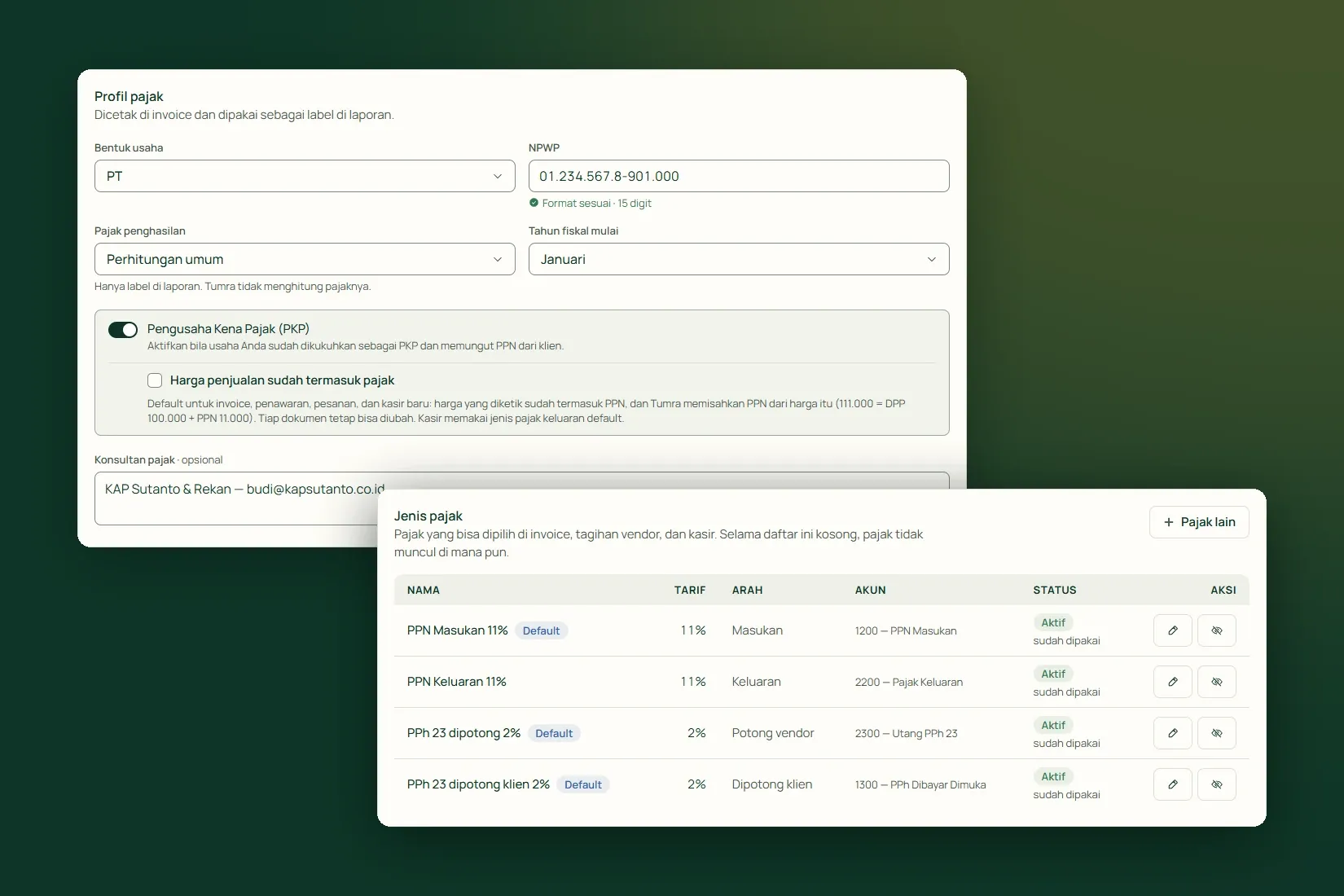
Tumra’s Tax feature summarises VAT (PPN) and income tax (PPh) from the transactions you’ve recorded. You can use the summary to prepare your filing, but you still need to check it against your business and current regulations. Filing the return is still done by you or your appointed representative.
Start with One Small Habit
Getting your business finances in order doesn’t have to start with a big change.
You can start by recording expenses, separating personal and business money, or checking unpaid bills every week.
What matters most is building the habit of recording and reviewing your finances consistently. From there, you start to understand where the money goes, which activities make a profit, and what needs fixing.
In the end, a healthy business isn’t only about how much you sell, but about how well you understand and manage the money it brings in.
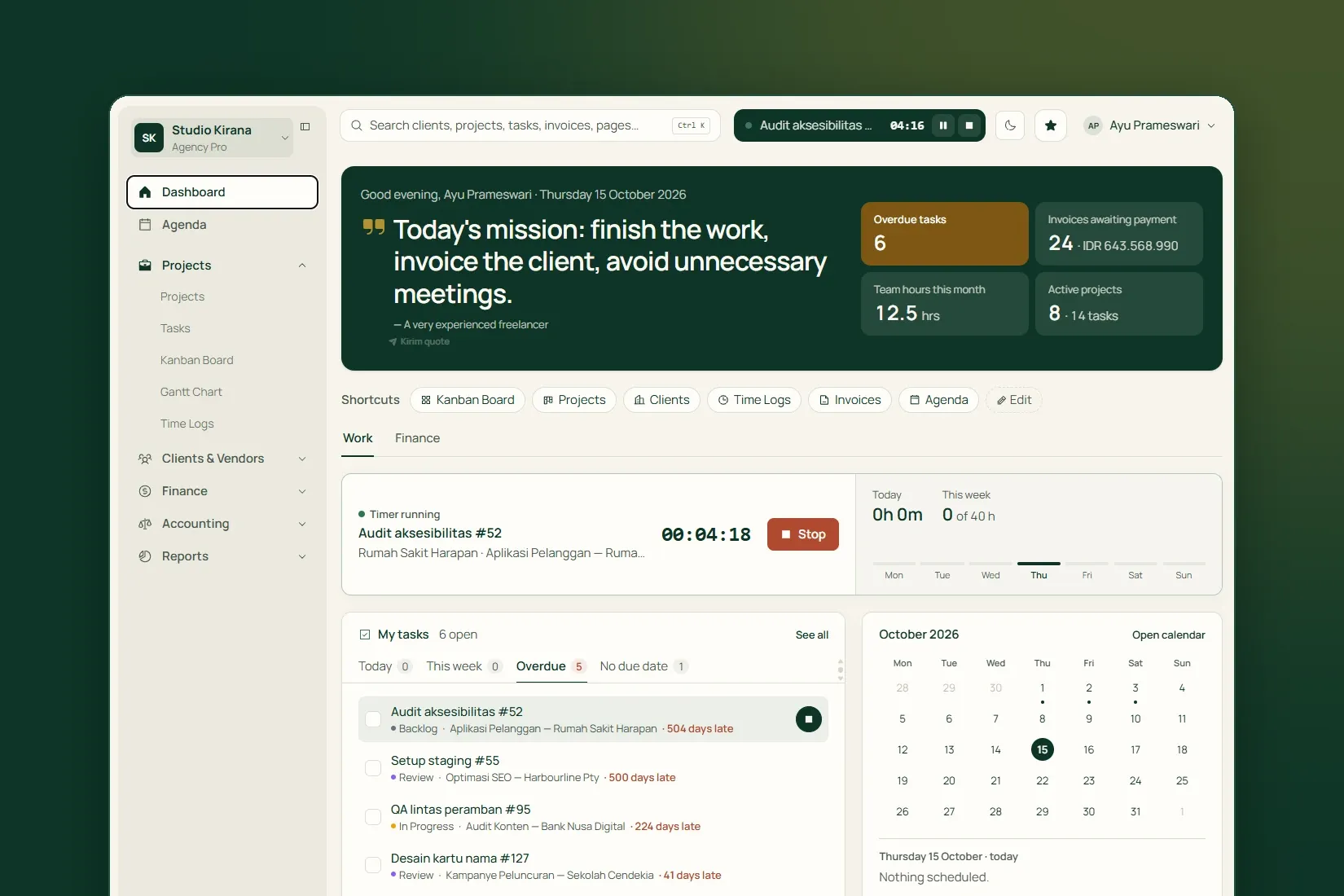
If you want to manage projects, sales, invoices, expenses, and bookkeeping in one place, Tumra can help keep everything in order.
With Tumra’s financial reports, you see how your business is doing from the numbers, not from guesswork: the Profit & Loss to understand your profit, the Cash Flow statement to track money coming in and going out, and Receivables Aging to see which bills are still unpaid.
Start with simple record-keeping, then build on it as your business grows.
Tumra — your work, clients, and finances in one place. 🌱
Start tidying up your business finances.
Record expenses, track profit, and manage bills in one place. Small habits, for a more organised business.